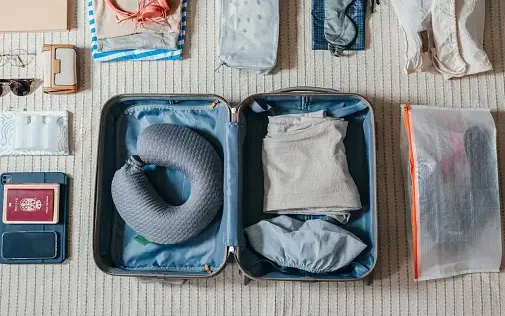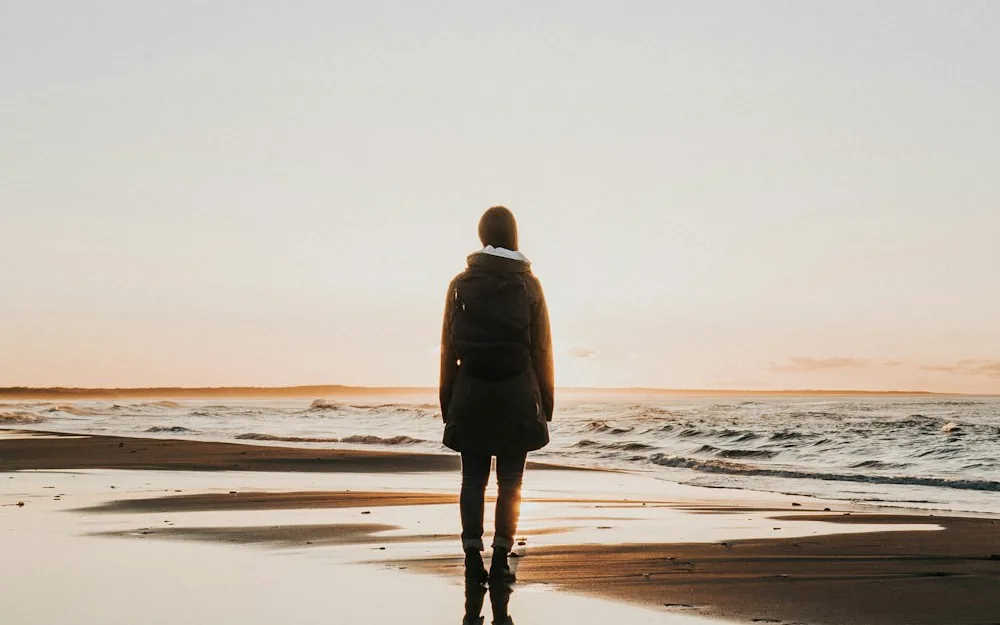
Somewhere around day four alone in a new city, something shifts. Not dramatically — nobody has a movie moment where the music swells. It's quieter than that. You just start noticing you're thinking differently.
Nobody talks about day four. Everyone talks about day one — the excitement, the arrival, the first meal eaten alone like a small act of defiance. Day four is the one that actually changes something, and it's the one nobody warns you about because it doesn't photograph well.
The First Few Days Are a Performance
Even alone, the first stretch of a solo trip is oddly social. You're narrating the experience to yourself, half-performing it for an audience that isn't there — texting photos back home, thinking in captions, measuring the trip against what you expected it to feel like.
That's not a criticism. It's just what happens when you've spent your whole life being watched, evaluated, accompanied. The habit doesn't disappear because you're standing alone in an airport. It takes a few days for the audience in your head to actually leave the building.
What Happens After the Audience Leaves
Somewhere past that point, the narration stops. You stop explaining the trip to yourself and just start having it. The coffee you're drinking becomes the actual point, not a photo opportunity. The wrong turn down a street becomes genuinely interesting instead of an inconvenience to mention later.
This is usually where people either fall in love with solo travel or decide it's not for them. Some people find the quiet unbearable — the absence of someone to process the day with, in real time, feels like something's missing. Others find it's the first real quiet they've had in years, and they don't want it to end.
Neither reaction is wrong. But you don't find out which one you are until you sit in it long enough to stop performing.
The Discomfort Is Doing Something
Solitude on the road has a specific kind of discomfort that solitude at home doesn't. At home, you can always call someone, always fill the silence, always retreat to a familiar routine. On the road, alone, the discomfort doesn't have an easy exit. You're stuck with it — a long train ride with no one to talk to, an evening in a hostel where you don't click with anyone, a meal where the silence at your own table feels loud.
Most people's instinct is to treat that discomfort as a problem to solve. Scroll the phone. Find a group tour. Book something social to fill the gap. Sometimes that's the right call — solo travel doesn't require constant isolation to count.
But sometimes the discomfort is worth sitting in, not because suffering is noble, but because it's usually the first honest silence you've had in a long time. Most people fill every gap in their day back home — commute, phone, TV, conversation — without ever noticing they're doing it. Travel alone removes the easy filler. What's left, once you stop reaching for it, is just you and whatever you actually think when no one's listening.
It Doesn't Make You a Different Person
Here's the part travel content usually oversells: solitude doesn't transform you into someone new. You don't come home a fundamentally different human because you sat alone in a café in Lisbon for three hours.
What it does is smaller and more useful than that. It gives you a data point. You learn what you're actually like without an audience — what you notice, what you avoid, what you're drawn to when nobody's opinion is in the room. That's not a transformation. It's information. And it's information most people never collect, because they're rarely alone long enough to gather it.
Bringing It Home
The strange thing about solitude on the road is that it doesn't stay on the road. Once you've sat with your own company for long enough to stop being uncomfortable with it, that skill doesn't expire when the trip ends. Silence at home starts to feel less like something to fill and more like something you know how to hold.
That's the actual souvenir. Not a transformation — just proof you can be alone with yourself and it's fine. Most people go a long time without ever needing to find that out.
Solitude isn't the absence of connection — it's the presence of yourself, uninterrupted. YoCompass is built for travelers who want that experience on their own terms, with the tools to make solo travel feel considered, not just survived.